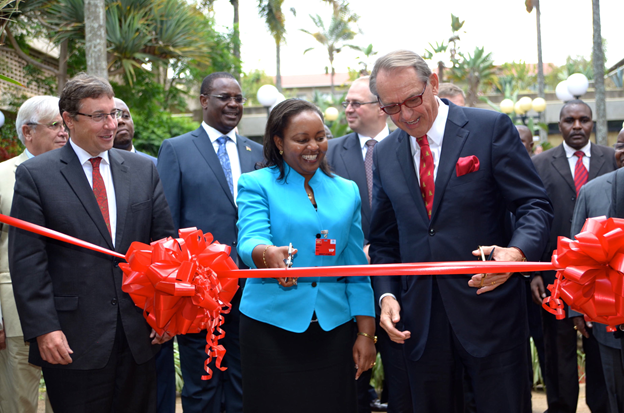
Hon. Ann Waiguru, Kenya’s Cabinet Secretary for Devolution and Planning and Mr. Jan Eliasson, Deputy Secretary-General, United Nations, officially opened the Pavilion. (183)
Key Milestones on the Multi-Stakeholder Partnership Journey
1992 – Earth Summit (Agenda 21)
- Broadening the formal understanding of the global NGO community of organisations at the UN, Agenda 21 formally recognised Nine Major Groups of this community and set out their rights and responsibilities in sustainable development.
1993 – Commission on Sustainable Development (CSD)
- The CSD was created to monitor Agenda 21 implementation and established an annual review process that enabled all nine Major Groups to engage directly and to report their own progress to the UN.
1993 – UNEP Adopts the Nine Major Groups Framework
- UNEP incorporated the Major Groups structure into its deliberations, ensuring their participation in environmental governance.
1995–1996 – CSD Stakeholder Implementation Days
- The CSD organised dedicated sessions for each stakeholder group to present their implementation efforts, progress, and challenges.
1995 – UNFCCC Expands Stakeholder Participation
- The UNFCCC began opening its processes to the nine Major Groups; the last constituency was formally recognised in 2011.
1995 – CBD and UNCCD COPs Enable New Constituency Recognition
- Both Conventions agreed that future Conferences of the Parties could decide on the recognition of additional stakeholder constituencies.
1996 – Habitat II
- Negotiations in Committee I were complemented by Committee II, where each stakeholder group presented its vision for implementing the Habitat II Agenda and identified partnership opportunities.
1997–2004 – CSD Multi-Stakeholder Dialogues
- The CSD convened formal two-day dialogues each year, bringing stakeholders and Member States together for structured discussions on priority issues.
2002 – The Bali Guiding Principles for Multi-Stakeholder Partnerships
- The Bali principles laid the foundation for the design and operation of effective partnerships.
2002 – World Summit on Sustainable Development (WSSD)
- WSSD launched a major wave of voluntary, non-negotiated multi-stakeholder partnerships and commitments by governments, business, and stakeholders to support sustainable development implementation.
2003 – G7 Begins Stakeholder Engagement
- The G7 initiated processes to engage with a wider range of stakeholder constituencies.
2006 – Strategic Approach to International Chemicals Management (SAICM)
- SAICM emerged from WSSD as a multi-stakeholder, multi-sectoral platform for the sound management of chemicals across their lifecycle.
2008 – ECOSOC Partnership Forum Established
- The annual ECOSOC Partnership Forum became a central venue for showcasing partnerships and discussing their challenges and opportunities.
2009 – Committee on World Food Security (CFS) Reform
- The CFS was fundamentally restructured to formally include stakeholder participation in policy deliberation and multi-stakeholder implementation planning.
2009 – G20 Launches Stakeholder Engagement Processes
- The G20 began systematic outreach to stakeholder constituencies.
2012 – Rio+20
- Rio+20 catalysed new multi-stakeholder partnerships and encouraged organisations within the nine constituencies to register their own voluntary commitments.
2013–2015 – 2030 Agenda & SDG Development
- Whereas partnerships are a prerequisite for the successful implementation of all 17 SDGs, Goal 17 in particular calls for revitalising global partnerships, prompting the expansion of multi-stakeholder collaborations across all goals.
2014 – SAMOA Pathway Principles for Partnerships
- The SAMOA Pathway reinforced principles for effective multi-stakeholder partnerships, particularly for Small Island Developing States (SIDS).
2016 – Marrakech Partnership for Global Climate Action (MPGCA)
- Under the Climate Champions, the MPGCA strengthened collaboration among governments and non-Party stakeholders to support implementation of the Paris Agreement.
2017, 2022, 2025 – UN Ocean Conferences
- These conferences mobilised action and multi-stakeholder partnerships to accelerate the delivery of SDG 14 on ocean sustainability.
2023 and 2026 – UN Water Conferences
- Designed to mobilise voluntary commitments and partnerships, these conferences support global progress towards SDG 6 on clean water and sanitation.
Overview
As discussed in previous chapters, stakeholder engagement has developed from the 1992 Earth Summit, which identified the roles and responsibilities of the nine Major groups and other stakeholders. The 2002 World Summit on Sustainable Development (WSSD) (184) then advocated that non-state stakeholders working together, sometimes with governments and the UN, could serve as an engine for implementing global agreements. These partnerships were called Type II partnerships. They were guided by the Bali Guiding Principles on MSPs (185).
WSSD saw over 300 multi-stakeholder partnerships launched. WSSD also recognised the need for a 10-year framework of Programmes on Sustainable Consumption and Production (10YFP) (186) to move towards more sustainable patterns of consumption and production. Again, utilising a multi-stakeholder approach. It would take until theRio+20 conference (187) for this approach to be formally adopted.
This approach was accelerated through the 2012 Rio+20 Conference, where over 700 voluntary commitments and multi-stakeholder partnerships were launched. This grew after the conference to over 1400.
The 2030 Agenda for Sustainable Development, and in particular the 17 Goals and 169 targets launched at the UN General Assembly Special Session on Heads of State in September 2015, opened the door to an avalanche of new and revised multi-stakeholder partnerships to deliver the Sustainable Development Goals. UNDESA has produced a list of the numbers for each goal, and if you go deeper, what those partnerships are addressing and who is involved with them and who was involved, will be easily demonstrated.
The table below shows how 2025 initiatives on the SDG Action Platform (188) are distributed across the Sustainable Development Goals (SDGs). Many initiatives contribute to multiple SDGs, reflecting the interconnected nature of sustainable development.
| Sustainable Development Goal | Number of Multi-stakeholder Partnerships on the UN website |
| SGD 1: No Poverty | 1495 |
| SDG 2: Zero Hunger | 1424 |
| SDG 3: Good Health and Well Being | 1326 |
| SDG 4: Quality Education | 1870 |
| SDG 5: Gender Equality | 1721 |
| SDG 6: Clean Water and Sanitation | 1862 |
| SDG 7: Affordable and Clean Energy | 1081 |
| SDG 8: Decent Work and Economic Growth | 2011 |
| SDG 9: Industry, Innovation and Infrastructure | 1092 |
| SDG 10: Reduce Inequalities | 1028 |
| SDG 11: Sustainable Cities and Communities | 1274 |
| SDG 12: Responsible Consumption and Production | 1715 |
| SDG 13: Climate Action | 2238 |
| SDG 14: Life Below Water | 2084 |
| SDG 15: Life on Land | 1363 |
| SDG 16: Peace, Justice and Strong Institutions | 1073 |
| SDG 17: Partnerships for the Goals | 2290 |
Multi-stakeholder Partnerships Around Delivering Action on the Triple Planetary Crisis
Addressing the interconnected challenges of climate change, biodiversity loss, and pollution requires extensive collaboration among governments, stakeholders among governments, Major Groups and other stakeholders, as well as local communities. Multi-stakeholder partnerships have become essential in driving progress by pooling resources, knowledge, and innovation toward shared environmental goals.
The Sustainable Development Goals database (189) provides a repository to review which multistakeholder partnerships are active on which goals and targets.
| The SUN Movement |
| While transparency is frequently referenced in multi-stakeholder partnerships, many initiatives have limited mechanisms to assess whether commitments translate into measurable environmental or risk-reduction outcomes. The Scaling Up Nutrition (SUN) Movement, launched in 2010 by the United Nations Secretary-General, today unites nearly 70 countries and thousands of stakeholders, offering a useful reference framework for integrating accountability into multi-actor collaboration, through national ownership, shared results frameworks, and regular monitoring and reporting. Experience also suggests that voluntary partnerships are most effective when supported by national regulatory frameworks and clear technical guidance, particularly when they connect major groups with implementers at sub-programmatic levels. Such linkages can help identify capacity gaps, support implementation, and inform more resilient governance structures. Similar approaches could be considered in partnerships addressing chemical management, water quality, and pollution prevention. |
Chemicals and Waste
Partnerships in this area focus on reducing harmful pollutants, improving waste management, and promoting circular economy approaches. Initiatives such as the Global Alliance on Health and Pollution (190) and the Global Partnership on Marine Litter (191) unite countries and industries to reduce chemical releases, safely recycle materials, and prevent plastic waste from entering ecosystems.
The Strategic Approach to International Chemicals Management (SAICM) (192) and its successor, the Global Framework on Chemicals, while voluntary (not legally binding) in nature, operate as multi-stakeholder/multi-sectoral frameworks. In essence, NGOs (including public and private-sector NGOs), intergovernmental and international organisations, and academia all have equal say as governments in their decision-making processes. While not legally binding, some governments (such as Germany) consider the GFC to be “politically binding.”
Biodiversity
The Convention on Biological Diversity (CBD) decided at COP15 to adopt the Kunming-Montreal Framework (193), which serves as a framework for work across all biodiversity-related conventions.
Efforts to halt biodiversity loss rely on cooperation between local communities, conservation organisations, other stakeholder groups – particularly indigenous peoples – and governments. Partnerships such as the Global Partnership on Biodiversity and the UN Decade on Ecosystem Restoration unite diverse actors to restore degraded lands, protect species, and promote sustainable land use practices that benefit both nature and people. The CBD also contains key provisions (194) that encourage multi-stakeholder cooperation and the development of partnerships.
In addition to the Kunming-Montréal Framework’s emphasis on multi-stakeholder partnerships, the 2030 Agenda for Sustainable Development, including the Sustainable Development Goals, has developed a database of partnerships for all the SDGs.
The two most relevant SDGs for biodiversity are:
- SDG 14 – Conserve and sustainably use the oceans, seas and marine resources for sustainable development (Life Below Water).
- There are 3,084 multi-stakeholder partnerships seeking to deliver the targets (195) of this goal.
- SDG 15 – Protect, restore, and promote sustainable use of terrestrial ecosystems, sustainably manage forests, combat desertification, halt and reverse land degradation, and halt biodiversity loss (Life on Land).
- There are 1.363 multistakeholder partnerships working to deliver the targets (196) of this goal.
Examples of initiatives to support the Convention on Biological Diversity include:
- International Union for Conservation of Nature (IUCN) World Conservation Congress (197): This event brings together thousands of leaders from government, civil society, indigenous peoples, business, and academia to focus on nature conservation and develop new global frameworks for biodiversity.
- CitiesWithNature (198): A platform launched by the IUCN and The Nature Conservancy that encourages cities to value and incorporate nature into urban planning, with participation from subnational governments like Regions4, which represents regional and provincial governments.
- CBD’s Sustainable Ocean Initiative (199): This initiative coordinates between regional seas and fisheries bodies, UN bodies (like FAO and IMO), governments, and civil society to improve working relationships and support the implementation of biodiversity goals, including the Kunming-Montreal Global Biodiversity Framework.
- Consortium of Scientific Partners on Biodiversity (200): A group of scientific institutions, like the Botanic Gardens of the Rheinische Friedrich Wilhelms Universität Bonn, that works with the CBD Secretariat to promote collaborative activities, share information on invasive alien species, and support action against them.
- NBSAP Forum (201): Supported by the United Nations Environment Programme (UNEP), this forum focuses on national biodiversity strategies and action plans (NBSAPs) and is executed by the UN Environment-World Conservation Monitoring Centre (UNEP-WCMC).
- The Roundtable on Sustainable Palm Oil (RSPO) (202): An association of oil palm growers, processors, manufacturers, retailers, banks, investors, and NGOs that promotes the growth and use of sustainable palm oil through cooperation across the supply chain.
- The Forests Dialogue (TFD) (203): Brings together individuals from diverse backgrounds, including industry, NGOs, and intergovernmental agencies, to address divisive issues and catalyse consensus on sustainable forest management, including forest certification and illegal logging.
- The Amazon Initiative (204): Led by the Inter-American Development Bank (IADB) and funded by several countries and the Green Climate Fund, this initiative supports regenerative activities in the Amazon basin, with a strong focus on empowering Indigenous Peoples and Local Communities.
Climate Change
Collaborative climate initiatives—such as the Race to Zero campaign and the Climate and Clean Air Coalition—bring together countries, cities, and businesses to align with global net-zero objectives. These partnerships drive the just transition to renewable energy, strengthen resilience to extreme weather, and facilitate the exchange of technologies that reduce greenhouse gas emissions.
Collectively, such multi-stakeholder efforts reflect the spirit of cooperation essential to addressing the triple planetary crisis and fostering a more sustainable and resilient world.
Key Factors For Partnership Success
- Clear Goals: Partnerships are more effective when they have precise and ambitious goals that limit room for interpretation.
- Funding: Stable and predictable funding streams are crucial for long-term success, as they help avoid dependence on volatile voluntary contributions.
- Management: Strong, efficient internal management practices are essential to achieving partnership goals.
- Meaningful Participation: The meaningful involvement of all stakeholders, including vulnerable groups and local communities, is fundamental for building trust and generating solutions that are both acceptable and sustainable.
Conclusion
The recognition that governments alone could not deliver on global policy decisions led to the emergence of multi-stakeholder partnerships since the World Summit on Sustainable Development as a way to achieve a whole-of-society approach, whether at the local, sub-national, or national level. Engaging all stakeholders as engines of implementation has had mixed success. The further away from the 2002 Summit, the more these processes are seeking greater transparency, monitoring, and reporting. In addition to the need for steady and predictable funding streams, addressing potential conflicts of interest is essential, as unmanaged conflicts can undermine trust, credibility, and the legitimacy of partnership outcomes. As we write this guide, perhaps the strongest accountability in partnerships exists in the area of Nutrition, pioneered by David Nabarro. The Scaling Up Nutrition (SUN) Movement (205) offers an example to other sectors on how to review MSPs. The time has come for a more critical review of MSPs.
This guide suggests, based on experience since the 2002 World Summit on Sustainable Development, that establishing Strategic Partnerships with Major Groups and Stakeholders at the UNEP Sub-Programmatic level provides an opportunity to help deliver those projects and activities. This could enhance UNEP’s impact by aligning partnerships with strategic implementing partners while also enabling further contributions to policy and governance discussions based on their experience and lessons learned.
The process of engaging Major Groups and other Stakeholders as partners around the UNEP’s Programme of Work 2026-27’s and its Medium-Term Strategy can align its engagement with Major Groups and other Stakeholders more closely with programme implementation – currently, there is too often a disconnect between representatives of Major Groups and other Stakeholders who contribute at a policy level and those who act as implementing partners or have technical expertise in the area.
Meetings with Strategic Partners and technical experts, which occur every two years, could go some way toward ensuring this. Narrowing the gap between these two groups will ensure that policy better reflects lessons learned. Multi-stakeholder Partnerships around UNEP’s agreed Medium Term Strategy and its latest Programme of Works could align additional resources to help deliver common objectives between stakeholders and UNEP.
References
183 United Nations Environment Programme. UNEP Photo Archive. Flickr,https://www.flickr.com/photos/unep/10533624096/in/album-72157635614021234
184 United Nations. World Summit on Sustainable Development (WSSD). 2002. ,https://sustainabledevelopment.un.org/milesstones/wssd
185 United Nations Department of Economic and Social Affairs. Bali Guiding Principles. https://www.un.org/esa/dsd/dsd_aofw_par/par_mand_baliguidprin.shtml
186 One Planet Network. The 10-Year Framework of Programmes on Sustainable Consumption and Production. https://www.oneplanetnetwork.org/about/10-year-framework-programmes-sustainable-consumption-production
187 United Nations. United Nations Conference on Sustainable Development (Rio+20).https://sustainabledevelopment.un.org/rio20
188 United Nations. Partnerships for the Sustainable Development Goals. https://sdgs.un.org/partnerships
189 United Nations. Browse Partnerships. https://sdgs.un.org/partnerships/browse
190 Global Alliance on Health and Pollution. Global Alliance on Health and Pollution. https://www.gahp.org/
191 United Nations Environment Programme. Global Partnership on Plastic Pollution and Marine Litter.https://www.unep.org/explore-topics/oceans-seas/global-partnership-plastic-pollution-and-marine-litter
192 Strategic Approach to International Chemicals Management. Strategic Approach to International Chemicals Management. https://www.saicm.org/
193 Convention on Biological Diversity. Decision Adopted by the Conference of the Parties to the Convention on Biological Diversity. https://www.cbd.int/doc/decisions/cop-15/cop-15-dec-04-en.docx
194 Convention on Biological Diversity. Cooperation. https://www.cbd.int/cooperation
195 United Nations. Goal 14: Life Below Water. https://sdgs.un.org/goals/goal14
196 United Nations. Goal 15: Life on Land. https://sdgs.un.org/goals/goal15
197 International Union for Conservation of Nature. IUCN World Conservation Congress 2025. https://iucncongress2025.org/
198 CitiesWithNature. CitiesWithNature. https://citieswithnature.org/
199 Convention on Biological Diversity. Sustainable Ocean Initiative. https://www.cbd.int/soi/
200 Convention on Biological Diversity. Science-Based Cooperation. https://www.cbd.int/cooperation/whole/science.shtml
201 Learning for Nature. National Biodiversity Strategies and Action Plans Forum. https://www.learningfornature.org/en/nbsap-forum/
202 Roundtable on Sustainable Palm Oil. Roundtable on Sustainable Palm Oil. https://rspo.org/
203 The Forests Dialogue. The Forests Dialogue. https://theforestsdialogue.org/front
204 Amazon Cooperation Treaty Organization. Amazon Initiative. https://www.amazoninitiative.org/
205 Scaling Up Nutrition Movement. Scaling Up Nutrition. https://scalingupnutrition.org/